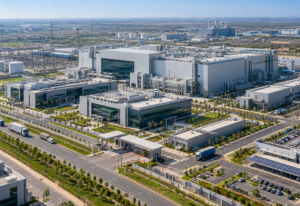
Dholera is entering a new phase of industrial development.
The semiconductor fab being developed by Tata Electronics has become one of the biggest developments associated with Dholera Smart City. However, announcements made in September 2026 show that the story is expanding beyond the manufacturing facility itself.
Tata Electronics announced a series of partnerships covering semiconductor materials, manufacturing, logistics, infrastructure, technology and talent development. Together, these developments point towards the formation of a broader semiconductor ecosystem within Dholera SIR.
From Semiconductor Fab to Ecosystem
A semiconductor fab depends on a wider network of specialised suppliers and services, including high-purity materials, advanced equipment, chemical logistics, engineering capabilities and technology partners.
On September 17, Tata Electronics announced a strategic partnership with Nexperia covering semiconductor manufacturing, technology and ecosystem development. The partnership includes groundwork for manufacturing Nexperia’s MOSFET products at Tata Electronics’ upcoming 300 mm fab in Dholera.
Tata Electronics subsequently announced partnerships involving companies including Fujifilm, Sojitz, NRS Corporation and Kelington, covering semiconductor materials, chemical logistics, infrastructure and operational readiness.
Fujifilm Plans ₹800 Crore Materials Plant
One of the most significant announcements came from Fujifilm, which signed an MoU with Tata Electronics to strengthen India’s semiconductor materials ecosystem.
Fujifilm plans to invest approximately ₹800 crore in phases to establish a semiconductor materials plant in Dholera SIR. The facility is expected to support the materials requirements of Tata Electronics’ semiconductor fab while helping develop local capabilities in high-purity semiconductor chemicals.
Tata Electronics has also partnered with Sojitz Corporation and NRS Corporation to develop a semiconductor-materials supply chain, including supply and storage of critical materials.
Infrastructure and Workforce Are Part of the Story
The ecosystem extends beyond manufacturing and supply chains.
Kelington is partnering with Tata Electronics on critical infrastructure and systems required for semiconductor manufacturing and operational readiness. These developments also point towards growing demand for specialised engineering and technical talent.
The wider urban ecosystem will need to develop alongside this industrial activity. Recent government updates have highlighted the need for housing, healthcare, schools, emergency services and commercial infrastructure to support the growing semiconductor cluster.
What This Means for Dholera SIR
The recent announcements suggest that Dholera’s semiconductor development is increasingly becoming an ecosystem story rather than a single-project story.
The key developments to watch include:
- Progress on the Tata Electronics semiconductor fab
- New semiconductor-materials and technology partnerships
- Supplier and vendor infrastructure
- Industrial and logistics development
- Skilled employment and supporting services
- Housing and social infrastructure
RWI Perspective
Dholera’s semiconductor story is moving beyond the construction of a single manufacturing facility. The emergence of materials suppliers, logistics capabilities, engineering partnerships and global technology collaborations indicates that a wider industrial ecosystem is beginning to take shape.
For those following Dholera Smart City Gujarat, the significance lies in how these industrial, infrastructure and urban systems develop together. RWI Developers will continue tracking these developments through its Dholera News & Insights coverage.